
Most homeowners who ask how to remodel a home on a budget are not starting with a blank slate. They’re living with a kitchen that doesn’t function, a bathroom that feels dated, or a house that never quite worked for the way their family uses it now. At the same time, they don’t want a project that starts with one number and ends somewhere far beyond it.
The part many guides miss is that budget control doesn’t come from one cheap material or one clever shortcut. It comes from a design-build process that ties planning, design, selections, permitting, and construction together from the start. In Jupiter and throughout Palm Beach County, that coordination matters. Labor, approvals, material decisions, and hidden conditions can all move the budget quickly if the job isn’t organized well.
A Quick Summary of Your Budget Remodeling Plan
A budget remodel works best when every decision is connected before construction starts. In a design-build process, the layout, scope, materials, permit path, and construction sequence are planned together, which is how costs stay controlled in Palm Beach County instead of drifting room by room.
- Start with the problem you need to solve. Put function first. Better storage, safer access, easier cleanup, more useful lighting, and improved traffic flow usually deliver more value than chasing a specific finish.
- Set your spending range early and treat it like a jobsite constraint. Include design, labor, materials, permits, and a contingency reserve from the beginning, so the plan reflects the real project cost instead of an optimistic shopping list.
- Build the project in the right order if the full scope does not fit today. A phased plan protects your money better than squeezing every idea into one contract and then cutting corners halfway through.
- Save on selections that do not carry the room. Stock-size cabinetry, practical flooring, and simpler countertop choices can keep the project looking finished without pushing too much of the budget into cosmetic upgrades.
- Plan for permits and hidden work early. In Jupiter and across coastal Florida, code updates, product requirements, and conditions behind the walls often affect cost more than homeowners expect.
- Keep one team accountable from design through construction. That design-build structure reduces rework, late selections, trade conflicts, and change orders, which are some of the fastest ways a budget remodel gets more expensive.
That is the short version. The goal is not the cheapest remodel. The goal is a remodel that solves the right problems, holds up well, and stays within a number you can live with.
First Things First Define Your Vision and Priorities
Budget remodeling usually goes off track before demolition starts. It happens when a homeowner begins with a loose wish list instead of a clear purpose.
A better starting point is simple. Ask what problem the remodel needs to solve. Maybe the kitchen feels crowded when two people cook. Maybe the guest bath needs to become a safer walk-in shower. Maybe a spare room has to function as a real home office with storage, lighting, and privacy. Those goals create better decisions than scrolling finishes and saving photos.
Separate needs from wants
The fastest way to lose control of cost is to treat every idea as equally important. They aren’t.
Write your list in two columns:
- Must-haves: items tied to function, safety, storage, workflow, durability, or code-related work
- Nice-to-haves: items that would be great if the budget allows, but don’t define whether the project succeeds
For example, in a kitchen, a must-have might be more usable storage or better lighting over prep space. A nice-to-have might be a pot filler, a specialty appliance, or a decorative wall finish. In a bathroom, proper waterproofing and a practical vanity matter more than a trendy tile pattern.
Practical rule: If a feature doesn’t solve a daily frustration, increase durability, or improve the way the room functions, it should not be first in line for budget dollars.
Decide what success looks like
Homeowners often say they want an updated space. That sounds clear, but it’s too vague to guide real choices.
A stronger target sounds more like this:
- Kitchen goal: seat the family comfortably, improve storage, and keep the existing plumbing layout
- Bathroom goal: replace the old tub, make cleaning easier, and add better lighting
- Home office goal: build quiet workspace and concealed storage without taking over a bedroom
- Laundry goal: add sorting space and cabinetry so supplies aren’t always visible
Those kinds of decisions shape the whole project. They help determine layout, scope, finish level, and what can wait.
Why this step saves money later
When the vision is clear, every later choice gets easier. You don’t spend money on details that don’t support the main purpose of the remodel. You also reduce scope creep, which is one of the biggest reasons projects get more expensive as they move along.
That’s especially true in design-build work. If the priorities are defined early, the design team can value-engineer the plan before construction starts, not after expensive decisions have already been made.
Building a Realistic Remodeling Budget That Works
A realistic remodeling budget starts with a hard conversation. A homeowner in Jupiter might say the budget is $90,000 for a kitchen, two bathrooms, flooring, and paint. Once we price permits, labor, protection, debris removal, finish materials, and the reserve for hidden conditions, that same scope often needs to be reduced, phased, or redesigned.
That is why design-build matters. Budgeting works better when the same team is shaping the layout, pricing the scope, and checking material choices before construction starts. In Palm Beach County, where labor, permit time, and finish costs are rarely low, disconnected planning is one of the fastest ways to lose control of the numbers.

Start with guardrails, not guesswork
A common budgeting rule is to keep total renovation spending in a range that still makes sense for the home’s value. Earlier in the article, we referenced the 30% guideline. It is not a law, and there are exceptions, but it is a useful check against overbuilding for the neighborhood.
Room-level allowances help too. A kitchen and a guest bath should not be budgeted the same way, and neither should a cosmetic refresh and a full gut renovation. The point is to match investment to use, resale context, and the amount of construction required.
If you want a practical framework before final plans are drawn, this guide on estimating remodeling costs helps break scope into categories that can be priced more accurately.
Price the project the way it will actually be built
Many budgets go off track because homeowners often total up cabinets, tile, countertops, and fixtures, then assume they are close. They are usually missing the parts of the job that make those materials work in a real house.
A workable budget needs to account for demolition, framing changes, electrical updates, plumbing adjustments, wall prep, floor leveling, waterproofing, trim, paint, permit fees, delivery charges, waste hauling, and project management. In older homes, even a simple room remodel can uncover code and condition issues that were invisible at the start.
Labor usually drives the quality of the outcome. Saving money by choosing a cheaper fixture is one thing. Saving money by underpricing tile prep or waterproofing is where expensive callbacks begin.
Contingency belongs in the original number
A contingency fund is part of the budget, not extra money sitting off to the side.
In practical terms, that reserve covers the things nobody can confirm until walls are opened or finishes are removed. I see it with damaged subfloors, outdated wiring, plumbing that was patched three times over the years, and concrete slabs that are not flat enough for new flooring. If there is no reserve, those discoveries force rushed substitutions or unfinished work.
For budget remodels, that is usually the moment where trust gets tested. A design-build process helps because the owner sees allowances, assumptions, and risk areas before work starts.
Build the budget in layers
Good budgets are easier to manage when each cost has a place:
- Construction costs: demolition, carpentry, drywall, flooring, cabinetry, tile, trim, paint
- Trade work: electrical, plumbing, HVAC changes, inspections
- Finish selections: counters, fixtures, lighting, hardware, appliances
- Soft costs: design, engineering if needed, permits, delivery, dumpsters, jobsite protection
- Contingency: money reserved for hidden conditions and required changes
That structure also makes trade-offs clearer. If a client wants to protect the overall number, we can compare choices objectively. Keep the existing layout and spend more on cabinetry. Use a simpler tile pattern and put money into better lighting. Refinish a vanity in a secondary bath and save the custom millwork for the kitchen.
Small DIY items can fit into that strategy too. For example, homeowner-led finishing work such as DIY installation of floating shelves may save money if the walls are ready and the measurements are right. Structural work, waterproofing, electrical, and plumbing are different decisions. Those mistakes cost more to correct than they save upfront.
The goal is a budget that can survive real construction, not just look reasonable on paper. That happens more consistently when design, estimating, selections, and build planning are handled as one system.
Phased Timelines and The DIY vs Contractor Decision
A tight budget doesn’t always mean a smaller vision. Sometimes it means a smarter sequence.
When homeowners try to do everything at once, they often stretch the budget too thin and make rushed decisions in the middle of construction. A phased plan gives you room to focus money where it matters most first, then return to lower-priority spaces later with a clear roadmap.

Why phasing works
A proven budget method recommends a 20% to 25% contingency minimum. The same source reports that 78% of unphased renovations overrun budget due to scope creep, while phased approaches with adequate contingency succeed over 85% of the time. It also notes that DIY on complex trades such as electrical or plumbing causes over 40% of cost spikes because errors have to be fixed later, based on this renovation budgeting methodology.
That lines up with what happens on real jobs. If the kitchen, primary bath, flooring, paint, and built-ins are all being figured out at once, homeowners tend to make expensive compromise decisions late.
A stronger sequence often looks like this:
- Phase one: fix layout problems, code-related work, plumbing or electrical updates
- Phase two: complete the kitchen or bathrooms that affect daily life the most
- Phase three: built-ins, office spaces, laundry upgrades, and cosmetic finishing work
What you can DIY and what should stay with a pro
Not every task needs a contractor. Some do.
Usually reasonable for DIY
- Painting
- Basic hardware swaps
- Simple shelving
- Non-technical decor updates
If you want a straightforward example, a project like DIY installation of floating shelves can make sense for a handy homeowner because it’s localized, visible, and relatively easy to inspect as you go.
Better left to skilled trades
- Plumbing changes
- Electrical work
- Tile waterproofing
- Structural modifications
- Cabinet layout changes that affect appliances or clearances
For anything beyond cosmetic work, the better question is not “Can I do it?” but “What happens if this goes wrong?” Before hiring help, it also pays to review a clear list of questions to ask a contractor before hiring.
Cheap labor is expensive when the next trade has to stop and wait for a fix.
Smart Savings on Materials and Finishes
Material savings come from discipline, not bargain hunting. In a design-build remodel, finishes are chosen against the plan, the room’s use, and the labor required to install them. That process keeps a nice-looking selection from turning into an expensive field change later.
The goal is simple. Put money into surfaces and parts that get touched, cleaned, wet, or bumped every day. Save on materials that can still look sharp without carrying a premium price tag.
Where value engineering actually works
Real savings usually show up when the design, purchasing, and construction team are working from the same priorities. A laminate countertop in the right kitchen can be a smart call. The same choice in a heavy-use family kitchen with hot pans, under-mounted sink demands, and a detailed edge profile can become a short-lived fix that gets replaced too soon.
The same logic applies to flooring. Luxury vinyl plank often makes sense in Palm Beach County because it handles humidity, sand, and dog traffic well, and it usually installs faster than more delicate materials. Engineered hardwood can still be the better choice in the right house, but only if the budget allows for the product, the prep, and the maintenance that comes with it.
Good value-engineering choices often include:
- porcelain tile instead of handmade or specialty tile
- stock or semi-custom vanities instead of full custom millwork
- simple quartz colors instead of heavily patterned slabs
- painted built-ins using standard cabinet components
- standard-size fixtures that avoid custom ordering and long lead times
Cheap substitutions in the wrong places usually cost more later. Shower waterproofing, tile prep, drawer slides, hinges, and lighting quality affect how the room performs after the dust settles. I would rather see a client choose a simpler backsplash and keep better cabinet hardware than do the reverse.
Material Comparison for Budget Remodeling
| Category | Budget-Friendly Option | High-End Option | Key Consideration |
|---|---|---|---|
| Countertops | Laminate | Quartz or natural stone | Laminate can look clean and intentional, but edge detail, sink type, and heat exposure matter |
| Flooring | Vinyl plank | Engineered hardwood | In humid climates, lower-maintenance flooring often holds up better in everyday use |
| Backsplash | Standard porcelain tile | Handmade or natural stone tile | Layout, grout choice, and termination details shape the final look |
| Cabinetry | Stock or semi-custom sizes | Full custom cabinetry | A well-planned cabinet layout often matters more than custom sizing everywhere |
| Shower walls | Large-format porcelain tile | Premium stone slab or specialty tile | Maintenance, grout lines, and installation complexity should guide the choice |
| Vanity tops | Simple quartz color or cultured option | Designer slab selection | Quiet patterns usually age better and are easier to match later |
Splurge and save with purpose
The cleanest way to make finish decisions is to separate performance items from decorative items.
Spend more on:
- faucets and valves used every day
- drawer hardware and hinges
- cabinet doors and drawer boxes
- task lighting over work areas
- tile installation in wet areas
Save on:
- statement tile used as a small accent instead of a full wall
- laundry room countertops and backsplashes
- secondary bathroom finishes
- shelf material inside closets or pantries
- custom trim details that add labor without adding function
That is where the design-build method protects the budget. A material is never judged by showroom appeal alone. It gets judged by installed cost, lead time, maintenance, replacement difficulty, and how it works with the rest of the project.
Floor refinishing is a good example. Homeowners often assume sanding and refinishing hardwood is an easy place to cut labor cost, but swirl marks, edge sanding mistakes, and uneven stain absorption are common. If you are weighing that trade-off, DIY vs Professional Service for Hardwood Floor Refinishing gives a practical breakdown of where professional equipment and experience start to matter.
Room-by-Room Strategies for High-Impact Upgrades
A budget remodel works best when each room gets a different level of investment. In Jupiter and across Palm Beach County, I tell clients to put money where it changes daily use, resale appeal, and construction efficiency. A design-build plan helps with that because the rooms are not priced in isolation. The kitchen, baths, laundry, and office all compete for the same budget, labor schedule, and material lead times.

Kitchens
Kitchens usually deliver the clearest payoff, but only if the scope stays disciplined. If the sink, range, and refrigerator locations work well enough, keeping that basic layout can protect a large part of the budget. Plumbing moves, electrical revisions, and patching multiple surfaces add cost fast, especially in older Florida homes where opening one wall often leads to more work than expected.
The strongest kitchen upgrades are often selective:
- repainting or refacing solid cabinet boxes
- replacing worn doors and drawer fronts
- upgrading counters in the main work zones
- adding under-cabinet and task lighting
- improving storage with pullouts, dividers, and trash solutions
- changing hardware for a cleaner, more current look
Hardware is a good example of a small item with visible impact. New pulls and knobs can tighten up the whole kitchen if the cabinets are structurally sound. That is a smart design-build decision because the installed cost is low, the schedule impact is small, and the visual return is immediate.
Bathrooms
Bathrooms reward restraint. A bath feels better when it is brighter, easier to clean, and laid out for how the household uses it.
Large-format tile can reduce visual clutter and grout maintenance. A better vanity can add function faster than a decorative wall treatment. If a tub never gets used, a shower conversion may be the right move, but only after confirming the plumbing layout, waterproofing details, and whether losing the tub makes sense for the home long term.
That trade-off matters. In a primary bath, a larger shower often improves daily life. In a secondary bath, keeping one tub in the house can still be the smarter resale choice.
Here’s a simple visual reference that shows the kind of updates homeowners often consider in this category:
Laundry rooms and home offices
These rooms do not need premium finishes to work hard.
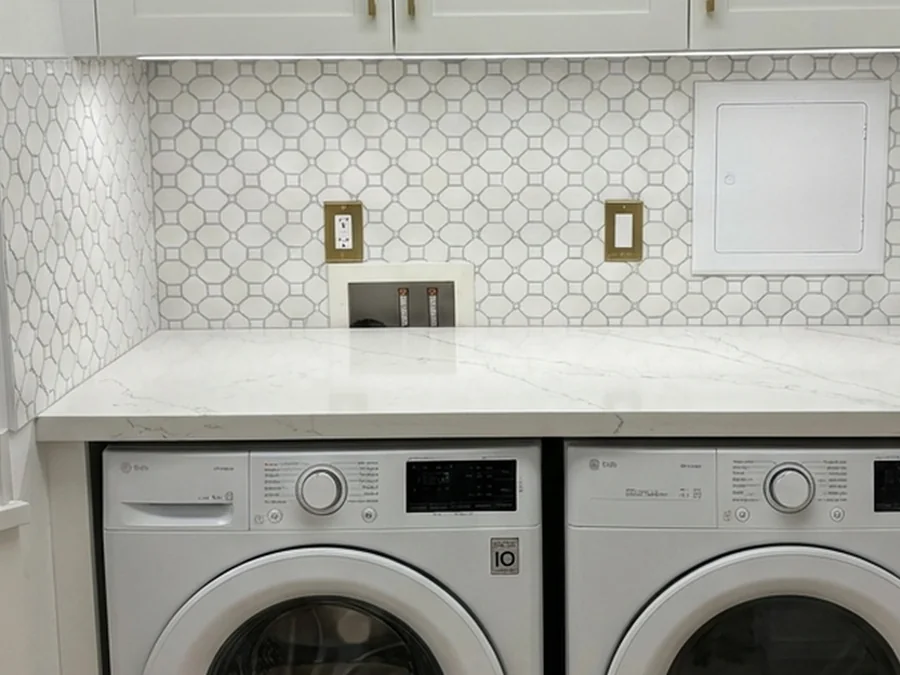
A laundry room usually benefits most from better storage, a usable folding counter, moisture-resistant flooring, and wall finishes that can handle wear. In many projects, stock cabinetry with a durable top does the job better than custom millwork.
A home office needs function first. Closed storage reduces clutter on camera. Proper desk depth matters more than decorative shelving. Good lighting and planned outlet locations make the room easier to use every day, which is why we address those items during design instead of trying to fix them after paint and furniture are in place.
Small changes that still help
Some of the best low-cost wins come after the construction scope is defined. Once the budget is protecting layout, lighting, storage, and durable finishes, smaller decor upgrades can stretch the final look without pushing the build cost higher. For ideas in that category, 5 DIY Home Decor Ideas on a Budget is a useful reference.
The main point is simple. High-impact remodeling is rarely about making every room expensive. It is about choosing where construction dollars solve real problems, then using design-build planning to keep those choices aligned from the first sketch through installation.
Navigating Permits and Planning for Unseen Costs
Many homeowners treat permits and hidden conditions like side issues. In practice, they can shape the whole budget.
Depending on scope, especially electrical, plumbing, or structural work, this may require a permit. A licensed contractor can confirm requirements and handle permitting. That matters because permit-related costs and code compliance are not just paperwork. They can affect product choices, sequencing, inspections, and what has to be opened up to complete the work properly.
In high-regulation coastal areas in Florida, permitting fees and code inspections can inflate budgets by 10% to 20%. Verified data also notes that minor kitchen remodels that average $30,000 nationally can rise to $45,000+ in Florida due to hurricane-resistant standards, according to this budget home improvement article.
What hidden costs usually look like
The expensive surprises are rarely decorative. They’re things like:
- old wiring that isn’t safe to leave as-is
- plumbing that has to be updated once walls are open
- framing issues discovered during demolition
- moisture damage around showers, windows, or exterior walls
- code-triggered updates tied to the scope of work
A good remodeling budget assumes discovery will happen. It doesn’t assume disaster. Those are different things.
This is one reason design-build planning matters so much in Florida. If the job is estimated without a realistic view of permits, inspections, and likely conditions behind finished surfaces, the original budget isn’t really a budget. It’s just a guess.
Local Note for Jupiter and Palm Beach County
Generic remodeling advice usually skips the local realities that affect budget and decision-making here.
What matters in this area
In Jupiter, Palm Beach Gardens, Tequesta, and nearby communities, HOA and condo approvals can influence material choices, work hours, access, staging, and documentation requirements. Even when the interior scope seems simple, approvals can affect how smoothly the project starts.
Humidity and salt air also change what makes sense. Some finishes that look good in a showroom won’t age as well in a coastal environment. Cabinet finishes, hardware coatings, flooring stability, and paint selection all deserve a more practical lens here.
Living-in-place planning matters too. Many homeowners stay in the house during at least part of the remodel. That changes how demolition is sequenced, how dust is controlled, and which room gets completed first.
Why local coordination affects budget
Lead times and trade coordination are rarely visible from the homeowner side, but they shape the project. If selections are made late, or if one trade finishes before another detail is resolved, the schedule gets harder to manage and budget pressure follows.
In Palm Beach County, the most cost-effective project is usually the one with the clearest preconstruction plan. That includes approvals, selections, staging, access, and a realistic understanding of which materials belong in a South Florida home and which ones don’t.
What We See on Real Projects
Homeowners often expect the expensive decisions to be obvious. They usually aren’t. The cost problems tend to come from ordinary choices made in the wrong order.
Common patterns that show up early
One pattern is putting too much attention on finishes before the layout is solved. A beautiful kitchen still feels frustrating if the refrigerator door blocks circulation or if the prep area has no useful landing space.
Another common issue is underestimating lighting. People notice cabinets and tile first, but they live with lighting every day. Poor task lighting can make a brand-new room feel unfinished, no matter what the surfaces cost.
We also see homeowners hold onto features because they already exist, not because they still make sense. Sometimes an oversized tub, a poorly placed pantry wall, or a shallow office niche is consuming space the room can’t spare.
The sequencing issue
Trade coordination matters more than is often understood. If cabinet dimensions aren’t settled before electrical locations are finalized, or if tile decisions come after plumbing rough-in assumptions have already been made, rework starts creeping in.
That’s why budget remodeling works best when decisions happen in the right order. Layout first. Then construction details. Then selections that fit the plan.
The rooms people love most after remodeling usually aren’t the rooms with the most expensive finishes. They’re the rooms that work better every single day.
Critical Mistakes to Avoid When Remodeling on a Budget
Trying to save money can create expensive problems if the savings come from the wrong place.
A verified cost-planning source notes that ignoring local market conditions can inflate costs 20% to 30%, and that 78% of budget overruns come from unstudied markets or unexpected material price hikes. The same source says DIY overreach on plumbing has a 35% failure rate, often doubling repair costs from leaks and damage, and stresses structured plans with professional input and a 20% contingency, according to this budgeting framework for renovation costs.
Avoid these five mistakes
- Starting demolition too early: If drawings, selections, and scope are still moving, demolition only increases pressure. Homeowners then make rushed decisions because the room is already torn apart.
- Choosing trades on price alone: Low bids often leave out details that show up later as change orders, delays, or lower-quality installation.
- Making mid-project changes for fun: Some changes are necessary. Many are not. Late design changes are one of the fastest ways to strain a budget.
- Saving on waterproofing or core installation items: Cheap shower prep, poor underlayment, weak ventilation, and bargain plumbing fixtures can cost far more later than they save now.
- Ignoring local conditions: Product availability, labor realities, and approval requirements affect cost. A budget built without those factors is fragile from the beginning.
The better way to save
Save by reducing unnecessary scope, simplifying material transitions, keeping plumbing where it makes sense, and selecting durable mid-range finishes.
Don’t save by gambling on work that’s hard to correct later.
When to Partner with a Design-Build Firm
For a simple cosmetic update, a homeowner can sometimes coordinate the work independently and do fine. Once the project involves layout decisions, multiple trades, permits, cabinetry, tile, lighting, and material coordination, disconnected planning usually costs more than people expect.
A design-build firm protects a budget by keeping the moving parts connected. The design choices are priced while they’re being developed. Material selections are made with installation realities in mind. Permitting and construction planning are tied into the same process instead of handed off from one party to another.
That reduces the common gaps that create overruns:
- design ideas that exceed the budget once priced
- selections made too late for smooth scheduling
- trade conflicts discovered after work has started
- repeated back-and-forth between designer, contractor, and homeowner
If you’re comparing project delivery methods, this overview of what a design-build contractor does explains the structure clearly.
In practical terms, that’s a key budget advantage. One team can evaluate trade-offs early and keep the plan aligned with the financial target instead of reacting after the job is already in motion. MELTINI Remodeling uses that model for residential remodeling in Jupiter, combining planning, estimating, selections, permitting coordination, and construction under one process.
Your Next Step
If you’re trying to figure out how to remodel a home on a budget, start with priorities, a realistic scope, and a plan that connects design to construction. That approach keeps the project calmer, clearer, and easier to control.
If you want help mapping out a budget-conscious remodel in Jupiter or Palm Beach County, schedule a consultation with MELTINI Remodeling.