

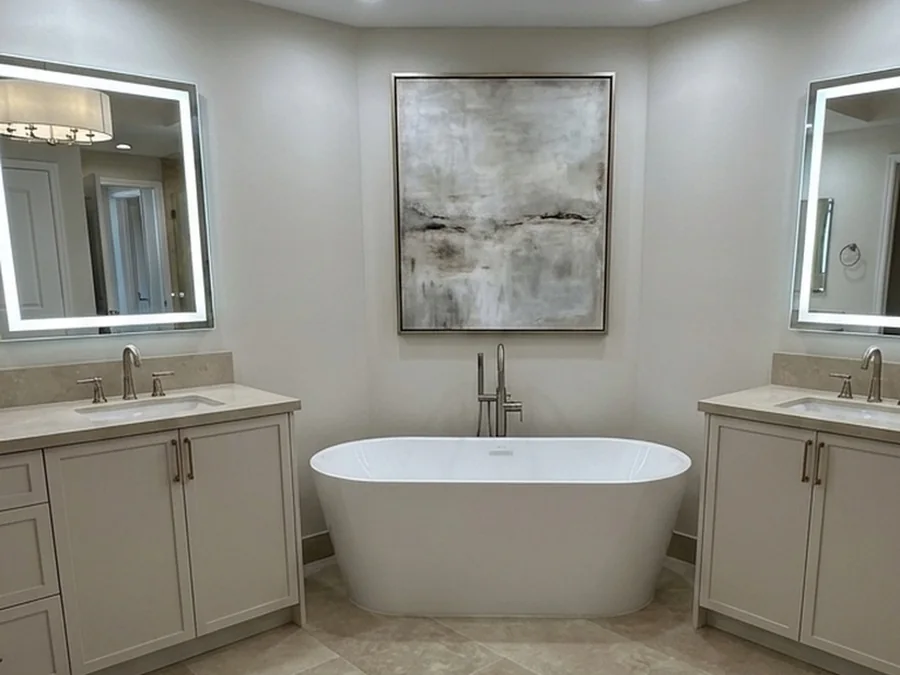
If you’re pricing a kitchen or bathroom remodel in Jupiter, you’ve probably already noticed how fast the numbers spread out. One estimate sounds manageable. The next jumps because someone mentioned moving plumbing, replacing old wiring, or upgrading materials for humidity. That gap is where most homeowner frustration starts.
Kitchen and bathroom remodel cost isn’t just about cabinets, tile, or fixtures. In Palm Beach County, it’s also shaped by older home infrastructure, moisture exposure, approvals, and how much of the existing layout you keep. A surface update and a full rework may look similar on a mood board, but they are priced very differently in the field.
Deconstructing the Kitchen and Bathroom Remodel Cost
A proposal can look scattered until you sort it into the five cost buckets that drive the job. Materials, labor, design and planning, permits, and contingency. In Jupiter and the rest of Palm Beach County, those buckets shift fast once a project touches older plumbing lines, humid-room material upgrades, or HOA review requirements.
What you’re paying for
Materials are the visible part of the remodel, but they are only one part of the total. Cabinets, countertops, flooring, vanities, plumbing trim, tile, lighting, shower glass, and hardware all land here. In this market, the material bill also changes based on durability choices. Bath products that hold up better in a humid house, cabinet construction that resists moisture, and finishes that are easier to maintain near salt air usually cost more up front, but they hold up better.
Labor is where budget planning gets honest. Demolition, framing, plumbing, electrical, drywall, tile setting, trim, painting, cabinet install, countertop templating, and punch work all need to happen in the right order. A low labor number often means thinner supervision, weaker scheduling, or missing scope. That usually shows up later as delays, change orders, or finish problems that cost more to correct than to build properly the first time.

Design and planning deserve more respect than they usually get. Good planning answers the expensive questions before demo starts. Will the vanity fit the door swing. Does the new island crowd the walkway. Is there enough power where the appliances are going. Are tile sizes, plumbing locations, and cabinet dimensions coordinated. Homeowners who want a better starting point before making selections can use this guide on how to estimate remodeling costs.
The multiplier effect most budgets miss
In Jupiter homes, one small layout change rarely stays small. Move a sink and you may need plumbing relocation, electrical rerouting, cabinet changes, countertop revisions, drywall repair, tile patching, and another permit review. Shift a shower to a new wall and the job can add drain work, venting changes, waterproofing adjustments, and more tile labor.
That multiplier effect is one of the biggest differences between a cosmetic update and a true remodel.
It also shows up more often in Palm Beach County than national cost guides suggest. Older homes can have galvanized piping, undersized electrical service, patched-over framing, or shutoffs that no longer work cleanly. Open the wall for a simple fixture relocation and the project may need code updates before finish work can continue. HOA submittals can add another layer if plumbing, exterior penetrations, dumpsters, work hours, or delivery staging need approval.
A practical rule helps here. Keep the sink, toilet, shower, and major appliances close to their current locations if budget control is the priority. Once water lines, drain lines, or cooking locations move, cost rises across several trades at once.
Permits belong in the base budget, not as an afterthought. Electrical, plumbing, and structural changes usually trigger them, and in this area permit timelines can affect schedule more than homeowners expect.
Contingency is the buffer that keeps a project from stalling when the walls open. In older kitchens and baths, common surprises include damaged subfloor, mold around wet areas, outdated valves, or wiring that should be corrected while access is open. Related house systems can surface at the same time, which is why some homeowners also review water heater replacement costs before deciding whether to combine utility work with the remodel.
Typical Kitchen Remodel Investment in Palm Beach County
A Jupiter homeowner can keep the same kitchen footprint and still see a wide spread in price. The biggest cost swings usually come from cabinet line, finish selections, and whether the project stays inside the existing utility layout. In Palm Beach County, that last point matters more than many online guides admit.
According to Angi’s kitchen remodel cost guide, cabinets, flooring, and countertops account for a large share of total kitchen spending. That lines up with what we see locally, but local conditions push the numbers around. Salt air, humidity, condo delivery restrictions, and older home infrastructure all affect labor time and material choices.
A practical local breakdown
In this area, a refresh and a remodel are priced very differently because the work below the finish line changes. A refresh usually keeps the room working where it is. A true remodel often means new cabinets, new lighting, more wall repair, and in many older homes, some level of electrical or plumbing correction once demolition starts.

| Palm Beach County Kitchen Remodel Cost Scenarios (2026 Estimates) | Typical Investment Range | What's Included |
|---|---|---|
| Minor Refresh | $25,000 – $40,000 | Cosmetic updates, select appliance replacement, surface improvements, and work that largely preserves the existing plan |
| Mid-Range Update | $40,000 – $80,000 | Cabinet replacement, new countertops, flooring, lighting, and modest layout adjustments |
| Major Renovation | $80,000 – $150,000+ | Full gut renovation, significant layout changes, upgraded finishes, and more involved plumbing and electrical scope |
What changes the budget fastest
The most cost-controlled kitchens usually keep the sink, dishwasher, and range close to where they started. Once those move, the multiplier effect kicks in. A sink relocation can trigger slab work, drain and vent changes, water line rerouting, electrical relocation, drywall repair, cabinet modification, countertop template changes, and inspection coordination. What looks like one design decision on paper often becomes five or six trade decisions in the field.
That multiplier effect is one of the biggest gaps between national averages and real Palm Beach County pricing. In older Jupiter homes, moving a range or adding an island with power can expose undersized circuits, outdated wiring, or patchwork plumbing repairs that were hidden behind the original cabinets. In gated communities and condos, access rules and work-hour limits can stretch labor and delivery costs too.
Cabinet selection also has an outsized effect on the final number. Stock cabinets can work well in a straightforward kitchen. Semi-custom usually makes more sense when ceiling heights are uneven, storage needs are specific, or the room needs tighter fit and finish. Custom raises cost again, but it can solve awkward walls, shallow pantries, and appliance integration that stock lines cannot handle cleanly.
In Palm Beach County, the smartest kitchen budgets usually protect layout discipline first, then spend on cabinet function, lighting, and materials that hold up in a humid house.
A lot of homeowners overspend early on appliances and underfund the parts they touch every day. Better drawers, better hinges, useful storage, and well-placed task lighting usually improve daily life more than a premium label on the range. The same planning approach helps in baths too, especially when comparing fixture moves versus finish upgrades in a bathroom renovation cost breakdown.
What a mid-range kitchen usually includes
A mid-range kitchen here often includes:
- New cabinetry: Usually stock or semi-custom, depending on storage goals, room dimensions, and how much filler or customization the plan requires.
- Countertops: Quartz is common because it wears well and handles daily use with less maintenance than some natural stones.
- Flooring updates: Material choice matters in South Florida. Products that tolerate humidity and clean up well after sand, rain, and daily traffic tend to perform better.
- Appliance package: Standard and premium packages create very different budgets, so it helps to price appliances early instead of treating them as an allowance.
- Lighting and electrical improvements: Older kitchens often need circuit changes, under-cabinet lighting, better task coverage, or code-driven updates once walls are open.
For inspiration that aligns with real buildability, review recent kitchen cabinet and upgrade projects before finalizing the scope.
Typical Bathroom Remodel Investment in Palm Beach County
Bathrooms are smaller than kitchens, but they often get expensive faster. The reason is simple. A bathroom packs plumbing, electrical, waterproofing, tile work, ventilation, and finish precision into a tight footprint. There isn’t much room for error, and there usually isn’t much room to hide it.
For mid-sized bathrooms, costs average $15,000 to $50,000, and plumbing and electrical overhauls make up 30% to 40% of expenses according to this bathroom remodel cost guide. The same source notes that moving a shower stack or adding a rain-head fixture can cost $5,000 to $15,000 alone.
The difference between a refresh and a true rebuild
A hall bath or guest bath refresh usually keeps the main fixture locations in place. That lets the budget go into a new vanity, updated lighting, better flooring or tile, fresh paint, and cleaner plumbing trim. It still requires careful work, but it avoids some of the heavy rerouting that drives bathroom cost.
A primary bathroom renovation is often a different animal. Once homeowners ask for a larger shower, niche lighting, frameless glass, double vanity adjustments, or a tub-to-shower conversion, more of the budget shifts below the finish line. That’s where rough plumbing, waterproofing prep, substrate correction, and ventilation upgrades start taking over.
| Palm Beach County Bathroom Remodel Cost Scenarios (2026 Estimates) | Typical Investment Range | What's Included |
|---|---|---|
| Refresh | $15,000 – $25,000 | Vanity replacement, fixture updates, paint, selected finish changes, and limited layout disruption |
| Mid-Range Remodel | $25,000 – $50,000 | New tile, upgraded vanity, plumbing fixture replacement, improved lighting, and stronger waterproofing scope |
| Major Primary Bath Renovation | $50,000+ | Full gut remodel, custom shower build, frameless glass, premium finishes, and more extensive plumbing or electrical changes |
If you want a room-by-room way to think through these decisions, this bathroom renovation cost breakdown is a useful next read.
Where bathroom money is best spent
In South Florida, waterproofing isn’t optional. It’s one of the places where trying to save money can produce the worst long-term result. The same cost guide notes that proper waterproofing adds $3 to $5 per sq ft upfront and can reduce long-term failure rates from 25% to under 5%.
That matters more here than many homeowners expect. Moisture exposure, daily shower use, and poor ventilation can stress weak assemblies fast. Large-format tile can also help reduce grout joints, which means fewer maintenance points and fewer places for moisture to sit.
A bathroom that looks expensive but is built on weak waterproofing is not a premium remodel. It’s a future repair.
A better local bathroom budget usually prioritizes:
- Waterproofing systems: Membranes, proper shower prep, and correct transitions.
- Ventilation: Especially in homes where bathrooms don’t dry out quickly.
- Tile layout and substrate prep: Flat walls and floors matter before the first tile is set.
- Vanity construction: Daily-use durability beats a pretty box with weak hardware.
For examples, explore our [Bathroom Designs & Renovations] page.
Local Note Specifics for Jupiter and Palm Beach County Projects
A remodel in Jupiter doesn’t behave exactly like one in a dry inland market. The same cabinet finish, hardware choice, or ventilation approach can perform very differently here. That’s why local planning matters before any style discussion gets too far.
Materials that hold up better here
Humidity changes what works. Painted cabinetry can still be a good choice, but box construction, finish quality, and installation conditions matter more than homeowners expect. In homes closer to the water, salt air can also be hard on lower-grade metal finishes, fasteners, and some decorative hardware.
Flooring choices need the same lens. A product that looks fine in a showroom may react poorly if the home has fluctuating interior humidity, older slab conditions, or frequent traffic from pool and patio areas.
Approvals and building logistics
In this area, HOA and condo approvals can shape both budget and schedule. Some communities limit work hours, elevator use, delivery windows, debris handling, parking, and where materials can be staged. None of that is dramatic, but it affects planning.
Depending on scope, especially electrical, plumbing, or structural work, this may require a permit. A licensed contractor can confirm requirements and handle permitting.
Living through the work
Many families stay in the home during kitchen or bathroom remodeling. It can be done, but the project needs to be organized around that reality. Temporary kitchen setups, controlled work zones, material staging, and dust protection all matter more when the house is occupied.
In occupied homes, the best projects aren’t just well built. They’re well managed day to day.
That’s especially true when one bathroom is out of service or the main kitchen is down. Clear sequencing and realistic daily access planning matter just as much as finish selections.
What We See on Real Remodeling Projects
The most expensive mistake usually isn’t a tile choice. It’s a layout decision that looked harmless on paper.

A common kitchen example is oversizing the island and shrinking the walk paths too much. Homeowners want more seating and more storage, which makes sense, but tight aisles can make the room harder to use. In bathrooms, we see a similar issue with oversized vanities that crowd door swing, shower entry, or drawer clearance.
Trade order matters more than most people think
Good remodels are built in sequence. Plumbing and electrical rough-ins need to align with the final cabinet and tile plan. Drywall and prep work need to be finished before trim details start. Tile layout should be coordinated before cuts are made around niches, valves, or lighting.
When that order breaks down, rework follows. A niche lands in the wrong place. A sconce conflicts with mirror size. A vanity blocks an outlet location. None of those are glamorous problems, but they cost money.
Here’s a short video that shows the kind of detail mindset remodeling work requires once planning turns into field execution.
Where spending usually pays off
On real projects, some upgrades earn their keep every day. Better drawer hardware, stronger cabinet construction, practical task lighting, and well-built shower waterproofing almost always matter. Homeowners notice those things long after the reveal photos are taken.
Other upgrades are more visual than useful. Some trendy open shelving ideas reduce storage. Some dramatic fixtures look good online but don’t improve function. Some very delicate finishes demand more upkeep than most families want.
What usually works best is simple. Spend where you touch the project every day, and be selective with statement items.
Common Budgeting Mistakes to Avoid
The easiest way to lose control of a remodel budget is to price the room by finishes alone. Cabinets, tile, counters, and fixtures matter, but they’re only part of the bill. The work behind them is what usually determines whether the number stays stable.
Mistake one is budgeting without a contingency
Older homes in Palm Beach County can hide plenty behind walls and under floors. An estimate can be thoughtful and still run into aging shutoffs, damaged framing, uneven substrates, or outdated branch wiring once demolition begins. If there’s no contingency in the plan, every discovery feels like a crisis.
A reserve changes the tone of the project. It gives you room to solve real conditions correctly instead of choosing the fastest patch.
Mistake two is changing direction after work starts
Scope creep gets expensive because it affects more than one decision at a time. A different vanity can change plumbing height. A larger shower can change glass, tile cuts, lighting position, and storage. A new cabinet idea can shift appliance or outlet planning.
Homeowners usually save more by making slower decisions before construction than by making faster decisions during construction.
Mistake three is buying strictly on lowest price
The least expensive option isn’t always the lowest-cost choice over time. Weak cabinet boxes, low-grade hardware, bargain plumbing trim, and shortcut waterproofing tend to show their age early. In kitchens and bathrooms, replacement is disruptive. Doing the work twice is rarely a bargain.
This same thinking applies if you’re remodeling with resale in mind. Some owners debate whether to improve the property first or list it in current condition. If that’s part of your decision, this article on whether to renovate a house for sale or sell as is gives a useful outside perspective.
Mistake four is confusing visible luxury with real value
A premium faucet doesn’t fix a weak layout. A dramatic tile wall doesn’t make a bathroom easier to clean. A fancy appliance package doesn’t compensate for poor storage. Budgeting works better when the money follows function first, then finish level.
Frequently Asked Questions About Remodel Costs
A Jupiter homeowner usually reaches this stage after the first round of sticker shock. The kitchen quote looks higher than expected, the bathroom number moved after plumbing review, and the next question is whether the project still makes sense. It often does, but the answer depends on what is being changed and how the house is built.
Is remodeling a kitchen or bathroom worth it for resale
Often, yes, if the work matches the house and the neighborhood.
In Palm Beach County, resale value usually follows practical improvements first. Better storage, durable finishes, working ventilation, solid lighting, and a layout that feels easier to use tend to help more than showpiece upgrades with no functional gain. A kitchen update that keeps the basic footprint can protect more of the budget than a full reconfiguration, and that matters if resale is part of the goal.
Bathrooms follow the same pattern. Buyers notice water damage, dated tile, poor lighting, and cramped shower layouts. They also notice when a remodel looks expensive but skipped the basics behind the walls.
Is it better to remodel both rooms at once
Sometimes. The savings usually come from coordination, not from some blanket discount.
If both rooms need work and the home already has aging shutoff valves, old drain lines, or undersized electrical service, combining projects can reduce repeated trade visits and inspection cycles. In older Jupiter homes, that can be a real advantage. On the other hand, doing both at once increases disruption, lengthens the construction window, and ties up more cash at one time.
I usually tell homeowners to look at the shared infrastructure first. If the kitchen and bath changes trigger plumbing and electrical work in the same parts of the house, bundling can make sense. If one room is mostly cosmetic and the other needs heavy layout work, phasing the projects is often easier on both budget and daily life.
Can we live at home during the project
Usually yes, but it depends on which room is under construction and how much of the house is affected.
A hall bath refresh is very different from a kitchen remodel that shuts down cooking, water access, and part of the electrical system. Layout changes make living at home harder because they bring more demolition, more inspections, and more days with walls open. In this area, humidity also matters. Once surfaces are opened up, drying, protection, and scheduling need to stay tight so the house does not sit exposed longer than necessary.
Families who stay in the home do better when they plan temporary routines before work starts. A backup bathroom, a simple meal setup, and clear delivery access make a big difference.
How do homeowners usually pay for remodeling
The common options are savings, home equity borrowing, and lender programs tied to renovation work.
The better question is how much of the project should be financed. Borrowing for long-life items such as cabinetry, tile work, plumbing upgrades, and electrical corrections is easier to justify than financing impulse finish upgrades that may not matter in five years. Before numbers get finalized, it helps to separate the base scope from alternates. That keeps decisions cleaner and reduces the chance of stretching the budget on selections that do not improve how the room functions.
If you are still sorting out scope, this guide on planning a kitchen remodel step by step helps homeowners define priorities before they start pricing.
What is the smartest way to keep costs under control
Hold the layout as steady as you reasonably can.
That is the biggest cost lever in kitchens and bathrooms because layout changes create a multiplier effect. Move a sink and the plumbing shifts. Move the plumbing and the electrical, cabinets, countertop fabrication, patchwork, tile cuts, and inspection path can shift with it. In Palm Beach County condos and HOA communities, approvals can add another layer if shutoffs, penetrations, delivery rules, or work hours are affected.
The smartest budgets usually spend first on what is hard to replace later. Cabinet construction, waterproofing, ventilation, plumbing quality, and installation accuracy matter more than chasing every premium finish on the board.
Get a Clear Plan for Your Project
Cost uncertainty usually comes from decisions being made out of order. Homeowners pick finishes before defining scope. They compare quotes that include different assumptions. They ask for layout changes after pricing is already built. That’s when a kitchen and bathroom remodel cost starts to drift.
A structured design-build process fixes a lot of that. The work starts with the house itself, not with a random allowance sheet. Existing conditions, layout priorities, material durability, and realistic trade scope get sorted before demolition. If you’re still shaping your kitchen goals, this guide on how to plan a kitchen remodel is a practical next step.
One option homeowners in this area use is MELTINI Remodeling, which handles design-build residential remodeling in Jupiter and nearby communities with planning, estimating, material selection, and construction under one process. That kind of setup can reduce misalignment between what was drawn, what was priced, and what gets built.
| Call to Action |
|---|
| Schedule a consultation |
If you want a clearer idea of what your own home will require, schedule a consultation with MELTINI Remodeling.
Related Resources
Planning a kitchen or bathroom remodel in Jupiter? Our Complete Kitchen Remodeling Guide covers budgeting, cost factors, and getting the most value from your renovation.