

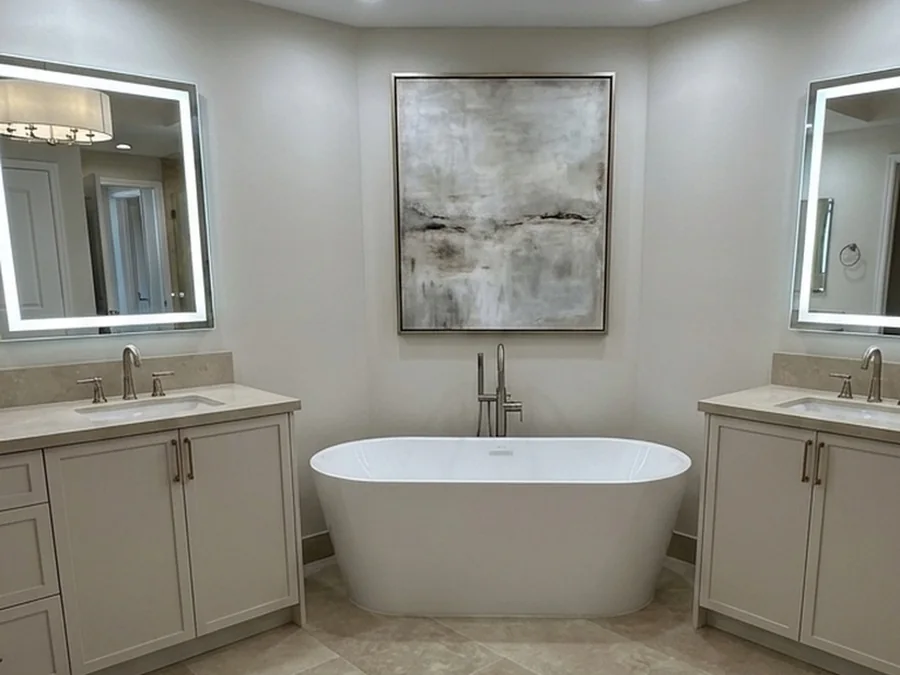
Choosing the right tile for your bathroom can feel like a huge decision, but it boils down to one simple rule: match the tile’s job to its location. Think of it this way: the tile on your shower floor has a very different job than the tile behind your vanity. Understanding this key principle is the first step to creating a bathroom that is both beautiful and built to last, especially in South Florida's humid climate.
This guide will walk you through the practical decisions—material, size, finish, and safety—to help you select tile with confidence.
Quick Summary
- Prioritize Material: Choose tile based on its location. Porcelain is the best all-around choice for floors and wet areas due to its durability and water resistance. Ceramic is a great option for walls.
- Size Affects Perception: Large-format tiles (12×24" or larger) can make a small bathroom feel more spacious by minimizing grout lines. Small mosaic tiles are ideal for shower floors as the extra grout provides better slip resistance.
- Finish is for Safety and Style: A tile's finish impacts both its look and safety. Use matte or textured finishes for floors to prevent slipping. Glossy finishes are easier to clean and work well on walls.
- Durability Ratings Matter: Check the PEI rating for durability (PEI 3-4 is best for most residential floors) and the DCOF rating for slip resistance on wet surfaces.
- Plan for Local Conditions: In South Florida, prioritize materials that resist humidity and mold. Always account for HOA/condo rules regarding soundproofing underlayment before you buy.
- Avoid Common Mistakes: Always order 10-15% extra tile (overage), consider grout color as a design choice, and never tile over an existing tile floor.
Matching Tile Materials to Your Bathroom's Needs
The first and most critical conversation we have with homeowners is about tile material. The tile you choose for your shower floor has a completely different job than the one that becomes an accent wall behind the vanity. Getting this right is about more than just looks; it's about making sure your new bathroom can handle South Florida's humidity for years to come.
Porcelain: The All-Around Champion
If there’s one material we recommend time and time again for bathrooms, it’s porcelain. Think of it as ceramic's tougher, more resilient older sibling. It’s fired at extremely high temperatures, making it dense, durable, and far less porous.
What does that mean for you? Porcelain has a water absorption rate of less than 0.5%, which is as close to waterproof as you can get. This makes it the undisputed king for shower floors, walls, and any area that gets wet.
The best part is that you don't have to sacrifice style for this performance. Modern manufacturing means porcelain can look just like high-end marble, warm hardwood, or industrial concrete, but without the maintenance headaches. For a busy family bathroom or a high-traffic master suite, it's the perfect blend of beauty and brawn.
Ceramic: A Smart Choice for Walls
Ceramic is a classic for a reason. It's versatile, comes in a staggering array of colors and finishes, and is often a bit kinder to the budget.
While it’s not as dense as porcelain, it's more than capable of handling areas that don't get constantly soaked, like the walls outside your shower or a backsplash. Because it’s a bit softer, ceramic is also easier to cut. This can be an advantage if you’re planning an intricate herringbone pattern or a custom niche, sometimes simplifying the installation process. We just don't recommend it for floors in a main bathroom, as it's more likely to chip under heavy foot traffic.
Natural Stone: Luxury with Responsibility
There’s nothing quite like the beauty of natural stone. Whether it's the elegant veining of marble, the earthy feel of travertine, or the rich texture of slate, these materials bring an authentic, high-end feel to a space that's simply unmatched. Each tile is completely unique.
However, this luxury is a commitment. Natural stone is porous by nature, so it has to be sealed—usually once a year—to protect it from water damage and stains. Some stones, like marble, are also sensitive to acidic products, so a stray drop of the wrong cleaner can cause etching. It’s a fantastic choice, but it’s best for those who truly love its organic character and are prepared for the upkeep.
If you want to dive deeper into waterproof materials, we have a whole guide covering waterproof bathroom flooring options.
Demystifying the PEI Rating
When you're looking at tile, you’ll probably see a "PEI rating." This is simply a durability score from the Porcelain Enamel Institute that tells you how well a tile's glaze will hold up to foot traffic and wear. It's a quick way to know if you're putting the right tile in the right place.
The scale runs from 1 to 5:
- PEI 1: For walls only. Never put this on a floor.
- PEI 2: Best for very light traffic, like a guest bathroom that’s rarely used.
- PEI 3: Good for standard residential floors with normal foot traffic.
- PEI 4: Handles high-traffic residential areas (kitchens, hallways) and even light commercial spaces.
- PEI 5: Built for heavy commercial use (think airports and shopping malls).
For most bathroom floors in a home, you'll want a tile with a PEI 3 or 4 rating. This durability is a big reason why a quality PEI 4 tile will look great for decades of daily family use, making it a very smart long-term investment.
This flowchart can help you visualize how these choices fit together. You start with the most important factor—where the tile is going—and then narrow down your options from there.

As you can see, function always comes first. Once you've picked the right material for the job, you can have fun with the aesthetics like size, color, and finish.
How Tile Size and Style Affect Your Space

After you’ve narrowed down the right tile material, the fun really begins: choosing the size and style. This is where you get to infuse your personality into the bathroom and truly define its character. The size of a tile can play tricks on the eye—it can make a room feel bigger, cozier, sleekly modern, or traditionally charming.
The shapes, patterns, and sizes you select will set the tone for years. Thinking about these elements is the difference between a bathroom that just is and one that feels thoughtfully designed.
The Impact of Large Format Tiles
You’ve probably heard that large tiles are only for large rooms, but that’s one of the biggest myths we have to bust. In reality, large-format tiles—which we consider anything with one side longer than 15 inches—are fantastic for making smaller bathrooms feel much more open and airy.
The secret is in the grout. Fewer grout lines mean less visual clutter, creating a clean, seamless surface that makes your brain perceive the space as bigger than it is. It’s a clean, calm look that’s especially popular with our clients here in Jupiter.
- For Floors: Laying big tiles, like a 24×24 or 12×24 inch, on the floor creates a serene, uncluttered foundation.
- For Walls: When you run those same large tiles up the shower walls, it amplifies the effect, making the entire room feel cohesive and grand. Plus, less grout means less cleaning, which is a win for everyone.
The Role of Small and Mosaic Tiles
Where large tiles create expanse, small tiles create focus. They draw your eye in, adding texture, intricate detail, and, in some cases, much-needed grip. Mosaics are perfect for creating standout features or solving practical problems.
The shower floor is a classic example. The grid of grout lines you get with a sheet of 2×2 inch squares or penny rounds provides incredible slip resistance right where you need it most. It’s a perfect marriage of safety and style.
But mosaics aren’t just for shower floors. We use them all the time for:
- Accent Walls: Imagine a wall of beautiful, intricate tile behind your vanity. It becomes the room’s artwork.
- Shower Niches: Placing a contrasting mosaic inside a shampoo niche gives a pop of designer personality without being overwhelming.
- Decorative Borders: A simple band of mosaic tile can break up a large wall of plain tile, giving it a custom-designed feel.
Balancing Classic and Current Styles
Bathroom trends can change quickly, but a good design should feel fresh for a decade or more. The trick is to choose styles that have staying power. Instead of chasing a fleeting fad, we help homeowners find patterns and finishes that feel current but are built on timeless design ideas.
Take wood-look porcelain tile, for instance. It has become a modern classic. You get the warmth of hardwood with the unbeatable durability and water resistance of porcelain—perfect for a bathroom floor. It strikes that ideal balance between a spa-like feel and real-world performance.
Other styles that never seem to get old include:
- Subtle Geometric Patterns: Classic hexagons or a simple subway tile laid in a timeless herringbone pattern.
- Marble-Look Porcelain: All the elegance of real marble without the headaches of sealing and staining.
- Neutral Textures: A tile with a soft, fabric-like texture or a brushed concrete look adds sophisticated interest that isn’t overpowering.
Ultimately, the goal is to find a style that works with your home's overall feel and reflects your own taste. That’s how you create a bathroom you’ll love walking into every single day.
Local Note: Jupiter / Palm Beach County
Living in South Florida presents unique challenges for home materials. Here in Jupiter, Tequesta, and Palm Beach Gardens, the combination of intense humidity and salty air is the real test for any renovation.
- Humidity & Mold Prevention: Constant high humidity means you must prioritize materials that resist moisture. We strongly recommend porcelain tile for floors and shower areas due to its near-zero water absorption. Using large-format tiles also helps by reducing the number of grout lines where mold can grow.
- Condo & HOA Approvals: If you live in a condo or a governed community, check your documents before buying materials. Many buildings require specific sound-dampening underlayment beneath hard flooring to reduce noise transfer to neighbors below. Getting approval upfront prevents costly delays.
- Material Lead Times: While many excellent tiles are available from local suppliers, specialty or custom-ordered tiles can have long lead times. To keep your project on schedule, it's critical to make your selections early so all materials are on-site when the installation team is ready.
- Living-in-Place Planning: Demolishing old tile is a dusty process. A professional contractor will use plastic barriers, zip doors, and air scrubbers to contain the mess, but some disruption is unavoidable. Planning for this helps make the renovation process smoother.
What We See on Real Projects

After years of remodeling bathrooms in the Jupiter area, you learn what truly makes a project successful long-term. Here are a few observations from a contractor’s perspective.
- The Foundation is Everything: The most beautiful tile in the world will fail if the surface underneath isn't right. We spend a significant amount of time ensuring the subfloor is level and the walls are plumb. A flat, stable substrate is non-negotiable for preventing cracked tiles and grout failure down the road.
- Waterproofing is a System, Not a Product: Tile and grout are not waterproof. The real protection comes from the complete waterproofing system installed behind the tile. Modern methods involve a continuous membrane that creates a sealed "box" in a shower, ensuring water can never reach the wall studs or subfloor. This is the only way to prevent hidden mold and structural rot.
- Grout Choice Changes Everything: Homeowners often see grout as an afterthought, but it's a powerful design tool. A contrasting grout (e.g., dark grout with white tile) creates a bold, graphic look. A matching grout color creates a seamless, monolithic appearance. This decision should be made during the design phase, not on installation day.
- Layout & Centering Matter: The difference between a DIY look and a professional job is often in the layout. We plan the tile pattern so that cuts are balanced and symmetrical. You should never have a full tile on one side of a wall and a tiny sliver on the other. Proper planning ensures a clean, intentional look.
- Balancing Vision with Reality: Clients often bring us photos of beautiful but high-maintenance materials like natural marble. Our job is to have an honest conversation about lifestyle. For a busy family, a high-quality porcelain that mimics the look of marble is often a better choice, providing the desired aesthetic without the demanding upkeep.
Mistakes to Avoid

A little foresight can help you sidestep the most common—and costly—mistakes we see homeowners make when choosing bathroom tile.
- Ignoring Slip Resistance on Floors: It's easy to fall in love with a glossy tile in a showroom, but on a wet bathroom floor, it can be a serious slipping hazard. Always check the DCOF (Dynamic Coefficient of Friction) rating for any tile intended for a floor. A higher rating means better grip.
- Under-Ordering Tile: Running out of tile mid-project is a frustrating and expensive delay. You may not be able to find the same dye lot, resulting in a visible mismatch. Always order 10-15% extra tile to account for cuts, breakage, and potential future repairs.
- Tiling Over Old Tile: While it seems like a time-saver, tiling over an existing tile installation is a bad idea. It can hide underlying issues like water damage or an unstable subfloor, and the added height creates awkward transitions at doorways. A professional job always starts with a clean, properly prepared substrate. Read more about why you should not tile over current tile.
- Choosing a Trendy Material That Doesn't Fit Your Life: Be honest about how much maintenance you're willing to do. Porous materials like natural stone or cement tile require regular sealing and careful cleaning. If that doesn't fit your lifestyle, a durable porcelain alternative is a smarter choice.
- Not Seeing a Sample in Your Own Home: The lighting in a showroom is very different from the lighting in your bathroom. Always bring a sample tile home to see how it looks in your actual space at different times of day. What looks like a soft gray in the store might look blue or beige in your home.
When to Call a Pro
Choosing tiles is just one part of a bathroom renovation. If your project involves moving plumbing fixtures, changing the electrical layout, or altering walls, you'll need a licensed contractor. A professional ensures that all work is done to code, proper waterproofing is installed, and the final result is built to last. A design-build firm can also help you navigate the countless decisions, from material selection to final finishes, ensuring a cohesive and functional design.
Next Step
Seeing and touching tile samples is the best way to move from ideas to a real plan. We invite you to come by our showroom to explore the options and discuss your project.
To get started, schedule a consultation with our team.